financial aisecurity, privacyand safety.
Financial AI Security, Privacy, and Safety: Securing Real-World Financial AI Systems for Mission-critical Services including Fraud Detection, Anti-Money Laundering, Payments, and Bank Transfers
Overview and Scope
This workshop examines the security, privacy, and safety challenges of AI systems deployed in financial services, with a focus on fraud detection, anti-money laundering, payments, and bank transfers. These systems operate on sensitive customer and transaction data in adversarial, regulated, and high-stakes environments.
It brings together researchers, practitioners, regulators, and financial institutions to discuss how real-world financial AI systems can be designed, evaluated, governed, and deployed securely. The workshop treats adversarial security, privacy protection, and the safety of AI behavior in operational financial workflows as connected problems.
- Fraud Detection
- Anti-Money Laundering
- Payments
- Bank Transfers
Important Dates
- Submission Deadline
- Author Notification
- Camera-Ready Deadline
- (Expected)
- Workshop Date
Call for Papers
- Submission
Authors must submit their paper as a PDF via the workshop submission site. At least one author of each accepted paper must attend the conference to present their work.
Submit via OpenReview- Format
- Submissions are limited to 4 pages, excluding references and appendices. The paper format must be the same as the main ICAIF conference.
- Awards
- Best Paper Awards will recognize outstanding contributions, selecting a 1st Place paper and a 2nd Place paper.
- Review
- Double-blind review. There is no rebuttal period.
- Presentation
- All accepted papers will be invited to a poster session. Participants must print and bring their own posters to the event. Poster format and submission requirements will be provided by the organizers upon acceptance.
- Oral talks
- Selected papers may also be offered an oral presentation, subject to schedule constraints.
- Proceedings
- The workshop is non-archival and has no official proceedings. Only author names, affiliations, and accepted paper titles will be posted; papers will not be made public.
Accepted Papers
38 papers were accepted to the workshop. Accepted papers will be presented across two poster sessions, Poster Session I and Poster Session II, at the event.
Best Paper Award
Best Paper Award recipients will be announced on-site at the event. Recipients will be notified individually by email beforehand.
Organizers

Dae-Young Park
Financial Security Institute (FSI)
He is a Senior Researcher at the FSI. He leads the development of financial AI regulatory guidelines and conducts research on secure AI systems in the financial domain. His work focuses on secure and safe AI for financial institutions, including AI governance and safety evaluation. His work has been published at leading AI and data mining venues, including ACM TKDD, CIKM, and IEEE ICDM, and has contributed to national R&D projects and financial AI governance initiatives.

Yongjae Lee
Ulsan National Institute of Science and Technology (UNIST)
Yongjae Lee is an Associate Professor at UNIST and the Chief Scientist of LinqAlpha AI Lab. He leads research on how AI systems understand financial information, reason about markets, and make reliable investment decisions. He serves on the Editorial Advisory Board of the Journal of Financial Data Science. He has actively contributed to the AI-for-finance research community as a workshop organizer and chair, including serving as Workshop Chair for ACM ICAIF 2024 and organizing related workshops at NeurIPS, ICLR, CIKM, AAAI, KDD, and ICAIF (Ph.D. in Industrial and Systems Engineering).

Youngjun Kwak
kakaobank
He is a Team Leader in the Financial Tech Lab at kakaobank, where he leads AI research and development for advanced banking services. His expertise includes real-world banking AI systems, financial service deployment, and the practical challenges of applying AI in digital banking environments (Ph.D. in Electrical Engineering at KAIST).

Yan Gao
Flower Labs / University of Cambridge
Yan Gao is a Research Scientist at Flower Labs and Adjunct Researcher at the University of Cambridge, where he works on privacy-preserving AI and federated learning. He has led the development and operation of a privacy-preserving AI platform (FlowerHub) which includes financial applications such as fraud detection. Given that raw customer data cannot be centrally shared due to privacy, his expertise is important in financial AI privacy (Ph.D. in Computer Science).

Seonkyu Lim
Korea Financial Telecommunications & Clearings Institute (KFTC)
He is a Team Leader at KFTC, where he leads initiatives in financial AI transformation, anti–money laundering, financial synthetic data generation, and the development of finance-specific benchmarks (Ph.D. in Computer Science).

Edoardo Vittori
Intesa Sanpaolo
Edoardo Vittori is a Business Director within Cross Asset Systematic Trading at Intesa Sanpaolo IMI CIB, where he works on portfolio construction and the development of systematic trading capabilities from research to production. He also contributes to the division’s work on AI strategy. He holds a PhD in Machine Learning from Politecnico di Milano, with research spanning reinforcement learning and online learning for trading, execution, hedging, market making, and portfolio optimization.
Dhagash Mehta
BlackRock Inc.
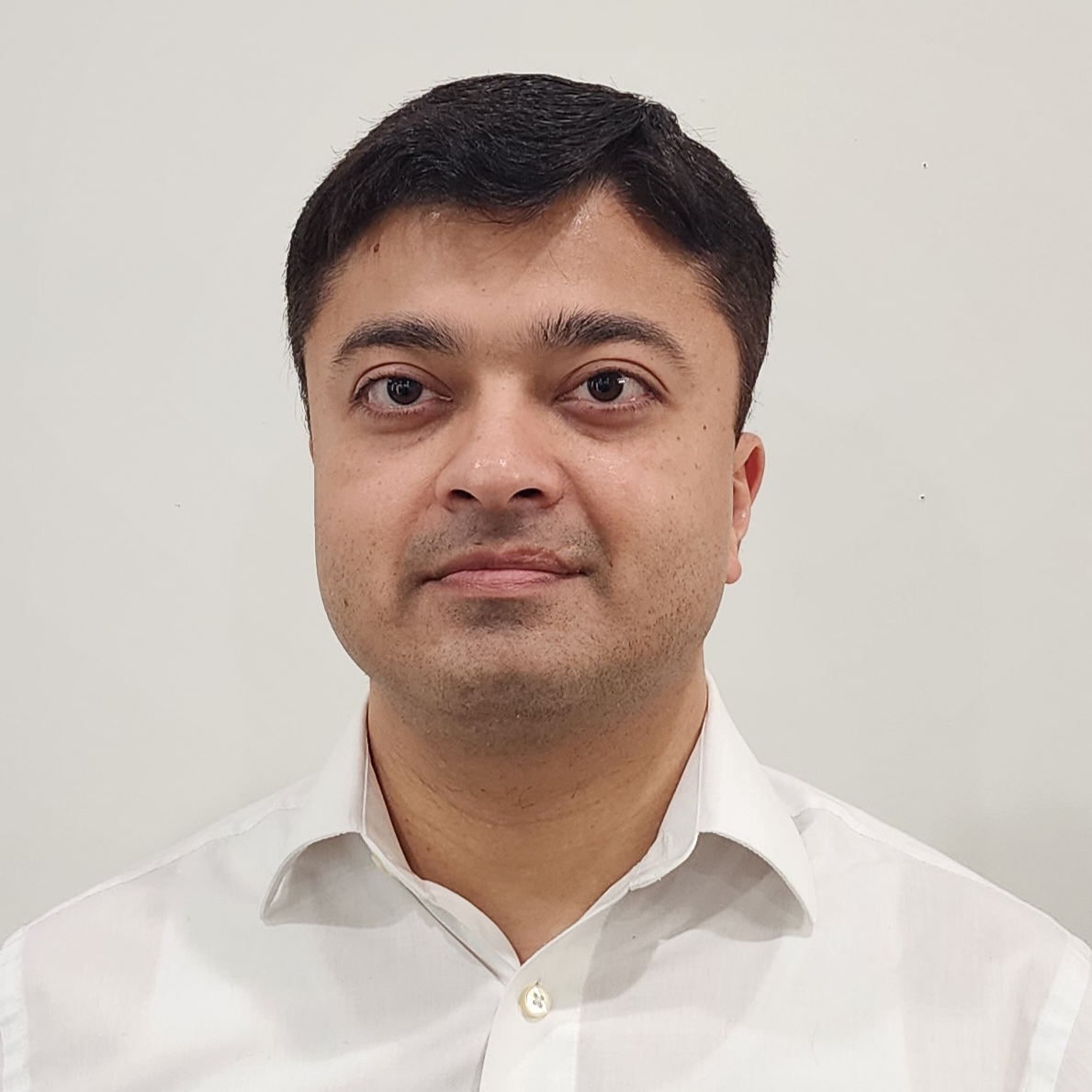
Dhagash leads the Applied Artificial Intelligence team within BlackRock, where he oversees efforts in applied AI, generative AI, and Trustworthy AI for financial and wealth management applications. He serves on the editorial board of the Journal of Financial Data Science and the Journal of ESG and Impact Investing, and is on the executive committee of ACM International Conference on AI in Finance (ACM-ICAIF). Dr. Mehta holds a Ph.D. in Theoretical Physics from a joint program between the University of Adelaide (Australia) and Imperial College London (UK), and his current research spans AI, optimization, AI for Finance, and Trustworthy AI.
Saurabh Nagrecha
Google
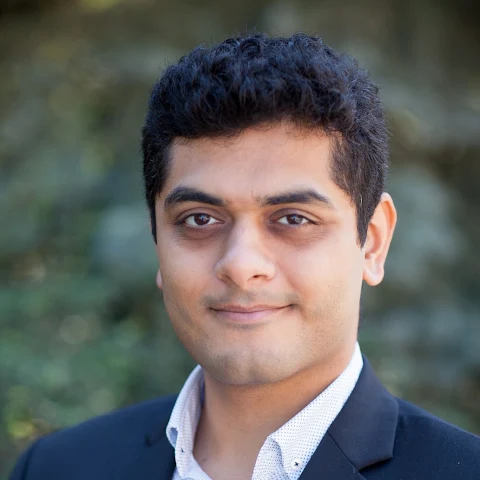
Saurabh Nagrecha is a senior technical lead in applied research at Google, overseeing fraud defenses across all Google Ad serving surfaces. His work focuses on leveraging multimodal AI, graph neural networks (GNNs), foundation models, and adversarial red teaming to combat sophisticated invalid traffic (IVT) and emerging AI-generated fraud threats. He earned his PhD in Computer Science from the University of Notre Dame, specializing in cost-sensitive imbalanced graph classification. Saurabh is also an active researcher, serving on program committees for top-tier conferences (KDD, NeurIPS, ICML) and collaborating on open-source AI initiatives for election security in Southeast Asia. He has developed and taught courses on network science and ML applications in finance.

Hyunkyu Kim
kakaobank
He is an AI Research Engineer at kakaobank's Financial Tech Lab, where he works on LLM operations, Agent systems, Retrieval system, and LLM evaluation. His research focuses on trustworthy AI in the financial domain.

Seulgi Choi
kakaobank
She develops AI research strategies for kakaobank’s mid- to long-term R&D roadmap, with research interests in user-centric financial agent design.

Bokwang Hwang
Korea Financial Telecommunications & Clearings Institute (KFTC)
He is an AI Research Engineer at KFTC, where he works on LLM and agent systems, retrieval-augmented generation, and their application to financial infrastructure. His research focuses on building reliable LLM-based systems for the financial domain.
Program
Welcome & Opening Remarks
Introduction to the workshop and schedule overview.
Frontiers in Privacy: Context, Causality, and AI
Sebastian Benthall, New York University / International Computer Science Institute
A key question for the privacy engineering community now is: to what extent is privacy-by-design, and privacy enforcement, a verifiable computational problem? We will consider this question through the lens of Contextual Integrity (CI), an interdisciplinary theory of privacy that translates between legal, social, and engineering concerns. Causally operationalized CI can answer questions that some other theories of privacy do not, such as how to tune the parameters of a PET, and how to enforce privacy on an agentic AI system that receives unstructured inputs. This talk discusses recent work and the research frontier.
Best Paper Talk I
Presentation by the first Best Paper Award recipient.
Financial Crime Detection: Utility, Robustness, Decentralization, and Privacy
Kubilay Atasu, Delft University of Technology
Graph neural networks (GNNs) have significantly improved the accuracy of financial crime detection, outperforming conventional approaches. In this talk, I will explore recent advances in improving the utility and robustness of GNN-based solutions. I will also discuss the remaining challenges in enabling decentralized, cross-institutional model training with privacy guarantees.
Poster Session I
Poster presentations and networking opportunities.
Coffee Break
Refreshments and informal networking.
Beyond traditional (rule base) Transaction Monitoring
Marco Fornasiero, Intesa Sanpaolo
Detecting financial crime increasingly requires moving beyond the analysis of individual or arbitrary group of transactions toward a broader understanding of entity behaviors and networks.
Best Paper Talk II
Presentation by the second Best Paper Award recipient.
Poster Session II
Poster presentations and networking opportunities.
Closing Remarks
Summary of the workshop, acknowledgements, and closing announcements.
Speakers
Kubilay Atasu
Delft University of Technology
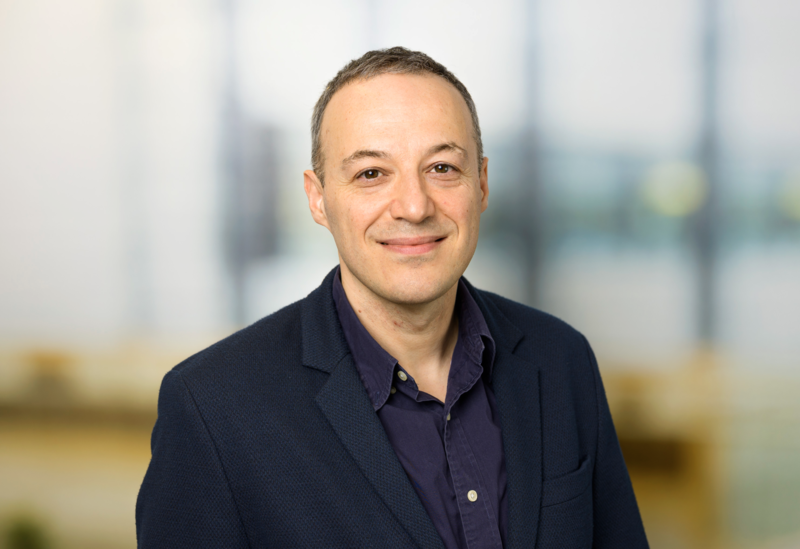
Kubilay Atasu is an Associate Professor at the Delft University of Technology, where he is affiliated with the Data Intensive Systems Section of the Department of Software Technology. His current research focuses on scalable graph machine learning and its applications to financial crime analysis. Previously, at IBM Research, he contributed to the development of scalable graph machine learning and hardware-accelerated computing technologies, including real-time transaction monitoring for IBM mainframes, accelerated text analytics, and distributed machine learning for IBM Power servers.

Marco Fornasiero
Intesa Sanpaolo
He is a Quantitative Auditor at Intesa Sanpaolo, where he oversees analytical platforms used for auditing AI systems. Previously, he worked in data science and anti-financial crime, applying graph analytics to data governance, fraud detection, and financial crime investigations. He also led an applied research team developing ML/AI solutions for the anti-financial crime domain.

Sebastian Benthall
New York University / International Computer Science Institute
He is a Research Director of the Information Law Institute at New York University School of Law, a Research Scientist at the International Computer Science Institute (ICSI), and External Faculty at the NYU Agent-Based Modeling Lab. His research lies at the intersection of AI, privacy, law, economics, and trustworthy computing (Ph.D. in Information Management and Systems).